


The Latest At Valley Forge
Why Load-Indicating Technology Improves Reliability in Non-Metallic Industrial Applications
Industrial equipment is evolving. As manufacturers increasingly replace traditional metal components with composites, engineered plastics, fiberglass, and other lightweight materials, maintaining reliable bolted joints has become more challenging.
While torque has long been the industry standard for fastener installation, it does not directly measure what truly keeps a joint secure: bolt preload.
That’s why bolt load monitoring and load indicating technology are becoming essential tools for improving equipment reliability, reducing maintenance costs, and preventing unexpected joint failures.
Why Bolt Load Matters More Than Torque
Torque is simply the rotational force applied to tighten a fastener. Bolt preload, or clamp load, is the linear stretch or tensile force created within the bolt that holds two components together.
Although related, torque and preload are not the same.
Variables such as thread condition, lubrication, coatings, surface finish, and installation methods can significantly affect how much torque is converted into usable clamp force. As a result, two identical bolts tightened to the same torque can produce very different preload values. This is why bolt preload measurement is becoming the preferred method for verifying joint integrity in critical industrial applications.
The Challenge of Bolting Non-Metallic Materials
Metal-to-metal joints typically maintain preload well after installation. Non-metallic materials behave differently.
Materials including composite structures, fiberglass panels, engineered plastics, rubber gaskets, timber, and concrete foundations can compress, creep, relax, or settle over time. Even when a bolt has not rotated or loosened, the clamped material may deform enough to reduce bolt preload.
The consequences can include:
- Reduced clamp force
- Increased vibration
- Joint movement
- Seal failures
- Premature component wear
- Increased maintenance costs
- Unexpected equipment downtime
Without bolt load monitoring, these changes often remain undetected until a failure occurs.
What Is Load Indicating Technology?
Load indicating technology measures or visually indicates the actual tension within a fastener rather than estimating preload from installation torque.
Instead of assuming a bolt remains properly tightened, maintenance personnel can verify the clamp force that is actually holding the joint together. This provides a more accurate assessment of joint condition throughout the equipment lifecycle.
For critical assemblies, bolt preload measurement delivers greater confidence than torque verification alone.
Why Bolt Load Monitoring Improves Reliability
Modern maintenance strategies increasingly focus on equipment condition rather than fixed inspection schedules.
Bolt load monitoring supports predictive maintenance by allowing operators to identify preload loss before it leads to joint failure.
Benefits include:
- Accurate verification of bolt preload
- Improved equipment reliability
- Reduced reliance on torque measurements
- Faster maintenance inspections
- Early detection of preload loss
- Reduced unplanned downtime
- Longer component life
- Lower maintenance costs
- Improved operational safety
Rather than reacting to failures, maintenance teams can schedule repairs based on actual joint condition.
Industrial Applications That Benefit from Bolt Load Monitoring
Composite Equipment
Composite pressure vessels, structural panels, and industrial equipment can experience preload loss as materials relax over time. Continuous or periodic bolt preload measurement helps maintain structural integrity throughout the service life of the equipment.
Renewable Energy
Wind turbines and solar installations rely heavily on bolted joints exposed to vibration, thermal cycling, and changing environmental conditions. Load indicating technology helps verify that critical fasteners maintain the required clamp force.
Heavy Equipment
Construction, mining, and agricultural equipment increasingly incorporates composite body panels and polymer components. Monitoring bolt preload helps reduce vibration-related failures while improving long-term reliability.
Concrete Foundations and Anchor Bolts
Concrete creep and settlement can reduce preload in anchor bolts over time. Regular bolt preload measurement provides assurance that critical equipment remains securely fastened.
Electrical Enclosures
Fiberglass and polymer enclosures expand and contract with temperature fluctuations. Bolt load monitoring helps ensure gasket compression remains sufficient to maintain environmental sealing.
From Preventive Maintenance to Predictive Reliability
Traditional maintenance programs often rely on periodic torque checks. However, torque alone cannot confirm whether sufficient clamp load still exists. Load indicating technology enables maintenance teams to monitor the parameter that truly determines joint performance—bolt load.
This condition-based approach allows organizations to:
- Detect preload loss earlier
- Reduce unnecessary inspections
- Improve maintenance planning
- Increase equipment availability
- Extend asset life
- Improve overall reliability
As industries continue adopting predictive maintenance strategies, bolt load monitoring is becoming an important part of improving equipment performance and reducing lifecycle costs.
The Future of Reliable Bolted Joints
Lightweight materials are transforming industrial design, but they also introduce new challenges for maintaining reliable bolted connections.
When assemblies include composites, plastics, concrete, or other non-metallic materials, installation torque alone cannot guarantee long-term joint integrity. Load indicating fasteners provide a knowledge into the action points possibly required based on material used (marterial deformation or possible failure point).
By combining bolt preload measurement with load indicating technology, manufacturers and maintenance teams gain direct insight into the actual clamp force securing their assemblies. The result is improved reliability, reduced downtime, safer operations, and greater confidence in every critical bolted connection.
How SPC4® Wireless Bolt Monitoring Helps Reliability Engineers Improve Safety, Maximize Uptime, and Reduce Maintenance Costs
In today’s industrial environments, reliability engineers face increasing pressure to maximize equipment availability while maintaining the highest safety standards and controlling maintenance costs. Whether overseeing mining operations, oil & gas production, heat exchangers, offshore drilling, power generation, or other large-scale production projects, one challenge is always top of mind: ensuring critical bolted joints remain secure throughout the equipment’s life.
Traditional bolt inspection methods are often labor-intensive, time-consuming, and reactive instead of proactive. By the time a loose bolt is discovered, it may be too late, having already contributed to unnecessary equipment wear, costly downtime, or even a serious safety incident.
Wireless bolt monitoring technology is changing that approach. The SPC4® Wireless Bolt Monitoring System, which includes the 720R Probe and Gateway, provides reliability engineers with continuous visibility into the condition of critical fasteners, enabling predictive maintenance strategies that improve safety, increase uptime, and significantly reduce operating costs.
Why Critical Bolts Matter
Bolted joints are fundamental to nearly every industrial operation. They secure structural components, rotating equipment, conveyor systems, crushers, wind turbines, pressure vessels, pipelines, and countless other assets.
Over time, however, bolts naturally lose preload due to factors including:
- Equipment vibration
- Thermal expansion and contraction
- Dynamic loading
- Material settling
- Fatigue
- Human error during installation
Even slight reductions in bolt tension can lead to equipment misalignment, accelerated wear, leakage, structural failures, or catastrophic equipment damage. For reliability engineers, detecting these issues before they escalate is essential to improving operational integrity and safety.
The Limitations of Manual Bolt Inspections
Many industrial sites still rely on scheduled manual inspections using torque wrenches, ultrasonic testing, or visual inspections.
While these methods have value, they present several limitations:
- Inspections only provide snapshots in time and not a full picture of equipment health
- Developing problems between inspections often go unnoticed
- Manual inspections often require significant labor
- Critical assets may need to be shut down
- Personnel may be exposed to hazardous environments
- Large sites can have thousands of critical bolted joints
As maintenance teams become leaner and equipment becomes more complex, relying solely on manual inspections is inefficient and costly.
Continuous Monitoring Instead of Periodic Checks
The SPC4® Wireless Bolt Monitoring System shifts maintenance from reactive inspections to continuous visibility and monitoring. Rather than waiting for the next scheduled inspection, the system continuously monitors bolt integrity and immediately alerts maintenance personnel when preload begins to change. This real-time visibility allows engineers to identify developing issues before they become full-blown equipment failures.
Instead of asking: “Did this bolt loosen sometime during the last month?”
Reliability teams can confidently say: “This bolt began losing preload two days ago, and we can address it during the next planned maintenance window.”
This proactive approach dramatically improves maintenance planning.
Supporting Predictive Maintenance Programs
Many organizations are investing heavily in predictive maintenance technologies that monitor equipment health before failures occur.
Wireless bolt monitoring complements existing condition monitoring programs alongside:
- Vibration monitoring
- Temperature sensors
- Oil analysis
- Motor current analysis
- Acoustic monitoring
Adding bolt joint monitoring fills a critical gap that traditional predictive maintenance systems often overlook. For reliability engineers, this creates a more complete picture of asset health while reducing unexpected failures caused by loose or failing fasteners.
Improving Job Site Safety
Worker safety remains one of the highest priorities for industrial organizations. Loose bolts can create significant hazards, including structural instability, equipment failure, pressure leaks, falling components, and unexpected shutdowns. Continuous monitoring helps identify these risks before they become dangerous situations.
Additionally, wireless monitoring reduces the need for personnel to perform routine inspections in hazardous environments such as:
- Elevated structures
- Confined spaces
- High-temperature equipment
- Active production environments
- Remote installations
Reducing unnecessary exposure supports safer maintenance practices while improving workforce efficiency.
Maximizing Equipment Uptime
Every hour of unplanned downtime carries significant financial consequences, including lost production, emergency repair costs, delayed customer deliveries, and overtime labor. The SPC4® system enables maintenance teams to schedule repairs during planned shutdowns rather than reacting to emergency failures.
By identifying bolt preload changes early, organizations can prevent minor issues from developing into major equipment failures. The result is higher equipment availability and improved operational reliability.
Lowering Maintenance Costs
One of the biggest advantages of wireless bolt monitoring is cost reduction. Instead of inspecting every critical bolt on a fixed schedule, maintenance teams can prioritize work based on the actual condition of each piece of equipment.
This condition-based approach helps organizations reduce:
- Routine inspection labor
- Emergency maintenance
- Equipment damage
- Replacement parts
- Contractor costs
- Production losses
Maintenance resources are allocated where they are needed most, improving efficiency without sacrificing reliability.
Data-Driven Maintenance Decisions
Data is extremely important to every reliability engineer because it provides important details about the health of their operating equipment. That’s why we’ve ensured our SPC4® Wireless Bolt Monitoring System provides actionable information that enables those engineers to identify performance trends before any failures might occur.
Historical monitoring data can help answer important questions such as:
- Which assets experience repeated preload loss?
- Are certain operating conditions causing bolt relaxation?
- Does our equipment require design improvements?
- Can maintenance intervals be optimized?
- Which assets present the highest operational risk?
This information supports continuous improvement initiatives and helps maintenance teams make informed decisions backed by real-world performance data.
Supporting Reliability-Centered Maintenance
Reliability-centered maintenance (RCM) focuses on preventing failures that have the greatest operational impact. Wireless bolt monitoring aligns naturally with RCM principles by helping organizations focus attention on their most critical assets.
Rather than treating every bolted joint equally, engineers can continuously monitor the fasteners that matter most, including:
- Critical rotating equipment
- Heavy machinery
- Structural supports
- High-pressure systems
- Safety-critical assemblies
- Remote infrastructure
This targeted monitoring strategy improves both maintenance efficiency and overall equipment reliability.
The Future of Smart Industrial Maintenance
For reliability engineers, success is measured by equipment availability, operational safety, and maintenance efficiency. The SPC4® Wireless Bolt Monitoring System delivers measurable value by continuously monitoring critical bolted connections, reducing the need for manual inspections, identifying potential failures early, and enabling predictive maintenance strategies.
The result is safer job sites, maximum equipment uptime, lower maintenance costs, and greater confidence that critical assets remain secure.
In an industry where even a single loose bolt can lead to significant operational and financial consequences, continuous wireless monitoring provides visibility for reliability teams who need to stay ahead of failures before they impact production.
Load Indicating Fasteners for Turret Bearings: Improving Safety and Performance in Steel Mills
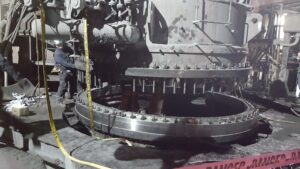
In steel mills, turret bearings operate under some of the most extreme conditions in industrial manufacturing. Supporting massive loads of molten steel while continuously rotating, these systems demand precision, durability, and the utmost reliability. Still, most mills are managing turret bearing performance with outdated methods. Our SPC4 Load Indicating Fasteners are changing that.
By replacing torque-based installation with real-time tension measurement, steel mills can significantly improve safety, reduce maintenance costs, and extend the life of critical assets like caster turret bearings and electric arc furnace (EAF) systems.

The Hidden Problem with Turret Bearing Fasteners
Turret bearings in steel mills are massive, with diameters ranging from 12 to 20 feet and 144+ fasteners per bearing that support uneven loads during continuous operation. In many cases, teams are relying on torque values to achieve proper preload during installations.
Torque vs. Tension
Torque is an indirect measurement of fastener tension. Various factors like friction, lubrication, and surface condition can significantly impact results, which leads to real-world variances of up to plus or minus 20% with bolts that are both underloaded and overloaded. All of this is cause for concern as the potential for failure is high.
The Real Cost of Traditional Fastener Methods
Using torque-based installation methods for turret bearings creates significant operational challenges:
High Labor and Equipment Costs
- 6+ person crews required for installation
- Full-day shutdowns
- Rental costs for hydraulic torque wrenches and pumps
- Annual re-torquing costs that require tens of thousands of dollars
Premature Equipment Failure
- Bearings expected to last 8-12 years may fail in as little as 14 months
- Replacement costs ranging from $150k – $300k
- Additional shutdowns that cost the mill more money
How Load Indicating Fasteners Improve Steel Mill Operations
Load indicating fasteners measure actual bolt tension, eliminating the guesswork and uncertainty of torque-based methods. Fastener preload is measured directly during installation, and maintenance teams can easily continue to verify performance. Also, the variability in load is significantly reduced with only a plus or minus 5% various as opposed to the 20% with torque-based methods.
With real-time tension verification, steel mills can finally feel confident that fastener tension values align with target specifications, providing a level of accuracy that’s previously been unattainable.
Improved Safety in Steel Mills Maintenance
Safety is the most important benefit. Traditional methods have required large crews to enter confined spaces in hazardous conditions with extended exposure to high-risk environments. With load indicating fasteners:
- Inspections take less than an hour
- Crew size is reduced from 6+ to just 2
- Exposure to confined spaces is minimized
Reduced Downtime and Fastener Inspections
Instead of full- or multi-day re-torquing procedures, inspections for both internal and external fasteners only take about twenty minutes for a two-man crew. With a total downtime of less than an hour, our SPC4 Load Indicating fasteners are greatly improving operational efficiency. Maintenance teams will gain:
- Immediate insight into fastener condition
- The ability to detect issues early
- Confidence in system integrity
Lower Total Cost of Ownership
While load indicating fasteners may have a higher upfront cost, they deliver long-term savings by eliminating the need for:
- Annual re-torquing expenses
- Equipment rental costs
- Excess labor requirements
- Premature bearing replacements
A Smarter Approach to Steel Mill Fasteners
Our SPC4 Load Indicating fasteners don’t just improve fastener performance, they change how steel mills manage reliability. Our bolts don’t just work for turret bearings; SPC4 Load Indicating Fasteners can be used across multiple steel systems, such as Electric Arc Furnace (EAF) arms, Ladle Metallurgy Furnaces (LMF), and caster systems with uneven distributions. Engineers and maintenance professionals are increasingly recognizing the benefits of tension-based fastener technology, given its many advantages for their applications.
When drawings, part numbers, or documentation are missing, knowing how to reverse engineer a bolt in the field becomes critical. Field technicians and maintenance teams often need to identify fastener dimensions quickly to avoid downtime, safety risks, or incorrect replacements, so we’ve come up with a quick and easy way to gather all necessary specifications.
This guide walks through bolt reverse engineering step by step, showing how to accurately measure bolt dimensions using our Reverse Engineering Kit designed for on-site use.
Why Bolt Reverse Engineering Is Important in the Field
Field environments rarely offer ideal conditions for fastener identification. Over time, bolts can lose markings, experience wear, or be replaced with non-standard hardware. Without proper identification, teams risk selecting the wrong bolt for replacement, which can lead to joint failure, leakage, or equipment damage.
Our Reverse Engineering Kit allows you to:
- Identify bolt size without drawings
- Confirm thread pitch and bolt length
- Match specialty fasteners correctly
- Reduce downtime and rework
- Improve maintenance reliability
In many cases, fastener identification in the field is the fastest path to getting equipment back online.
What Is a Fastener Reverse Engineering Kit?
Our fastener Reverse Engineering Kit is a portable set of bolt measurement tools used to easily determine critical fastener dimensions in the field. These tools eliminate guesswork and allow technicians to accurately measure bolts directly from equipment.
Tools included:
- Shank Gauge (inch and metric) to measure bolt diameter
- Thread Gauge to identify thread pitch
- Neck Angle Gauge for specialty bolt geometry
- Tape Measurer to measure bolt length and shank length
Together, these tools provide everything needed for field bolt identification.
Step-by-Step: How to Reverse Engineer a Bolt in the Field
Follow this proven process to reverse engineer fasteners accurately and consistently.
Step 1: Measure the Bolt Shank Diameter with the Shank Gauge (inch & mm)
The first step in identifying a bolt is measuring the bolt shank diameter. Using the shank gauge:
- Insert the bolt into the gauge openings
- Identify the closest matching diameter
- Confirm whether the measurement is inch or metric
Correctly identifying bolt diameter is essential for load capacity and proper fit.
Step 2: Measure Thread Pitch Accurately with the Thread Gauge
Thread pitch tells you how many threads occur over a given distance, and it must match exactly for a proper fit. Using the thread gauge:
- Place the thread gauge against the bolt threads
- Test different leaves until full thread contact is achieved
- Record the pitch value
You may need to test several leaves before finding the perfect match. A common mistake is matching your thread pitch to the incorrect measurement, which will likely lead to failure.
Step 3: Measure Bolt Neck Angle with the Neck Angle Gauge
Tool: Neck Angle Gauge
Some bolts include a neck transition angle between the head and shank. This bolt specification is especially important in specialty and load-critical fasteners. Using the neck angle gauge:
- Place the gauge against the neck transition
- Compare angle alignment
- Record the matching angle value
This detail is often overlooked but can be essential when replacing custom or application-specific bolts.
Step 4: Measure Bolt and Thread Length with the Tape Measure
Proper bolt length measurement depends on the bolt head style. Measure the shank length from under the head to the tip for hex bolts, and for countersunk bolts you’ll need to measure the overall length, including the head. Using the tape measure:
- Lay the bolt flat
- Measure along the centerline
- Record total length and unit type
Accurate bolt length measurement ensures proper engagement and preload. Be sure to also measure the thread length during this step. The standard thread length for bolts is two times the diameter (recorded in step one). If your bolt requires a thread length that is not standard, you’ll need to ensure that the specification is communicated to your supplier.
Bolt Reverse Engineering Checklist
When reverse engineering a bolt in the field, always document:
- Bolt diameter
- Thread pitch
- Metric or inch designation
- Neck angle
- Head style (hex, oval, countersunk, etc.)
- Bolt length
- Thread length
- Any visible wear or damage to the current bolt
This checklist supports consistent fastener identification and simplifies reordering.
Best Practices for Accurate Bolt Measurement
To improve accuracy when reverse engineering fasteners on site:
- Clean threads before measuring
- Remove debris and corrosion
- Measure twice to confirm results
- Verify inch vs. metric early on in the process
- Use calibrated bolt measurement tools
- Photograph the bolt for reference
Who Should Use a Bolt Reverse Engineering Kit?
A portable bolt measurement kit is especially convenient for:
- Field service technicians
- Maintenance and reliability teams
- Millwrights and mechanics
- Shutdown and turnaround crews
- Reliability engineers
- Mining and processing operations
- Heavy equipment repair teams
Knowing how to reverse engineer a bolt in the field eliminates delays caused by missing specifications. With the right fastener measurement tools and a structured approach, technicians can accurately identify bolt size, thread pitch, and length details, even without drawings or part numbers.
When documentation fails, measurement becomes the specification.
For more information or to request a quote, visit our website or email sales@vfbolts.com
DECLARACIÓN DE CONFORMIDAD
(Para Equipos de Alcance Reducido – SUBTEL)
20 Feb 2026
Fabricante:
Valley Forge & Bolt Manufacturing Company
4410 W Jefferson, Phoenix AZ, 85043, USA
Representante / Importador en Chile:
ProTorq
La Florida 37, 1262373 Antofagasta
ventas@protorq.cl
Producto:
- Nombre comercial: SPC4® 720R Wireless Monitoring System
- Marca: Valley Forge & Bolt
- Modelo: SPC4® 720R
- Tipo de equipo: Monitor de tensión remoto, transmisión por radio inalámbrica
Especificaciones técnicas principales:
- Bandas de frecuencia: 902-928 MHz
- Potencia radiada (p.i.r.e.): <.028 W
- Ganancia de antena: 3 db
- Tecnologías / Modulación: FSK Modulación
- Módulos RF utilizados: SparkFun Electronics 13909, General ISM < 1GHz Transceiver Module 915MHz Surface Mount
Declaración
Yo, Dirk Halley, actuando como representante autorizado de Valley Forge & Bolt Manufacturing Co., declaro bajo mi exclusiva responsabilidad que el dispositivo:
SPC4® 720R Wireless Monitoring System – SPC4® 720R
cumple íntegramente con los requisitos establecidos por la normativa chilena aplicable a equipos de alcance reducido, incluyendo:
- Resolución Exenta N° 1985 (2017) y sus modificaciones.
- Resolución Exenta N° 3103 (2012) sobre exposición a radiofrecuencia.
- Resolución Exenta N° 737 (2025) sobre autodeclaración, exhibición de información, y código QR obligatorio.
- Cumple con los niveles de potencia, bandas de operación, parámetros técnicos y condiciones de ensayo establecidos por SUBTEL.
La documentación técnica y el informe de ensayo correspondiente se encuentran disponibles en el sitio web vinculado mediante el código QR en el empaque del producto, conforme a lo dispuesto por la normativa vigente.
Fecha de emisión: 01/02/2026
Dirk Halley
Projects Engineering Manager
Valley Forge & Bolt Manufacturing Co.
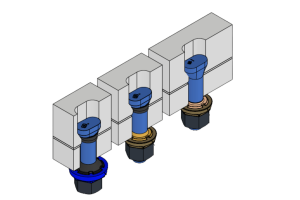
The Modular Sealing Washer System is an adaptive mill sealing system for liner bolt holes, available in two standard sizes and one oversize option. This range in sizing options provides the versatility necessary to allow mill mechanics to select the appropriate seal based on the condition of their mills.
Over time, liner mounting holes become elongated and enlarged, which creates opportunities for slurry leakage.
Why Do Mill Liner Bolt Holes Leak Over Time?
Even with proper installation, several mechanisms are working against a perfect seal:
- Cyclic loading & vibration – Mills experience constant impact and shell flexing, which can relax bolt preload and break down sealing interfaces.
- Wear and erosion – Slurry is extremely abrasive, causing any exposed gaps around bolts, washers, or sleeves to slowly erode and increase leak paths.
- Bolt preload loss – Thermal cycling, liner wear, and settling all have an impact on clamp force. Once a preload drops below a critical level, slurry will infiltrate.
- Corrosion – Corrosion under washers or sleeves can create capillary paths, especially in acidic or chloride-rich slurries.
- Installation variability – Even the smallest of inconsistencies in torque, surface cleanliness, or alignment can shorten the seal life.
Despite these factors, good design and maintenance can prevent leakage and extend the seal life of each bolt hole. This is why modern mills are increasingly focused on bolt load verification, improved sealing assemblies, and predictive maintenance rather than reactive slurry cleanup.
How to Stop Slurry Leakage in Mill Liner Bolt Holes with a Modular Sealing Washer System
As mill diameters increase, a higher load is required to keep liners in place; some liner manufacturers require up to 200,000 pounds of bolt preload for larger SAG mills. These high load amounts can prematurely deform the steel retaining washer, which is why Valley Forge & Bolt engineered our new Modular Sealing Washer System to withstand more than 225,000 pounds of load without plastic deformation. Our washer is also strategically forged instead of cast, which is much better-suited to withstand higher loads. Lister washers and other cast washers found in the field have created many of the problems that our Modular Sealing Washer System now solves.
Relining your mill takes valuable time, and any inefficiencies in the process will cost you production time and, ultimately, revenue. Every process improvement in your mill environment equates to more operating hours each year. Our system is configurable to provide a solution for your sealing needs regardless of the condition of the liner mounting holes, and is designed to easily handle the highest load values specified by the OEM and liner manufacturers.
Let us help!
Are you experiencing issues with slurry leakage in your mill liner or a loss of load from washer deformation? Let us help! We’d like to offer you some modular sealing washer sets to test at your mill processing site. Simply fill out the form below and our team will respond with the next steps!