Why High-Quality Nuts Matter in Critical Bolted Joints
When engineers specify fasteners for a critical bolted joint, the focus typically goes to material grade, tensile strength, hardness, coatings, and thread specifications. While those characteristics are important, another aspect of fastener quality can have a major effect on how a nut performs in an assembly: the relationship between the nut’s internal threads and its bearing face.
For critical applications, a nut is more than a threaded piece of metal. It is a precision component that must engage the bolt correctly while providing a stable bearing surface against the joint. This is why thread alignment, face geometry, and manufacturing precision are critical components of a quality-machined nut. At Valley Forge & Bolt, our attention to the relationship between these features is an important part of our production of industrial fasteners for demanding applications.
What Makes a High-Quality Nut?
A high-quality industrial nut needs to do more than simply fit onto a bolt. The internal threads need to engage the mating bolt threads properly. Additionally, the bearing face should be in consistent contact with the joint, and the relationship between those surfaces needs to be controlled so the nut can seat properly as it is tightened.
In other words, the nut needs to maintain the correct relationship between two critical features:
- The internal thread, which establishes the nut’s axis
- The bearing face, which transfers clamp load into the joint
When these features are properly aligned, the nut can advance smoothly along the bolt and establish predictable contact with the joint. When they are not, the resulting geometry will likely introduce unwanted variation into the bolted connection, undermining the long-term integrity of the fastener. For applications with critical joints, being able to control that variation as much as possible will save operational teams time and money with increased uptime.
Why Thread and Face Alignment Matter
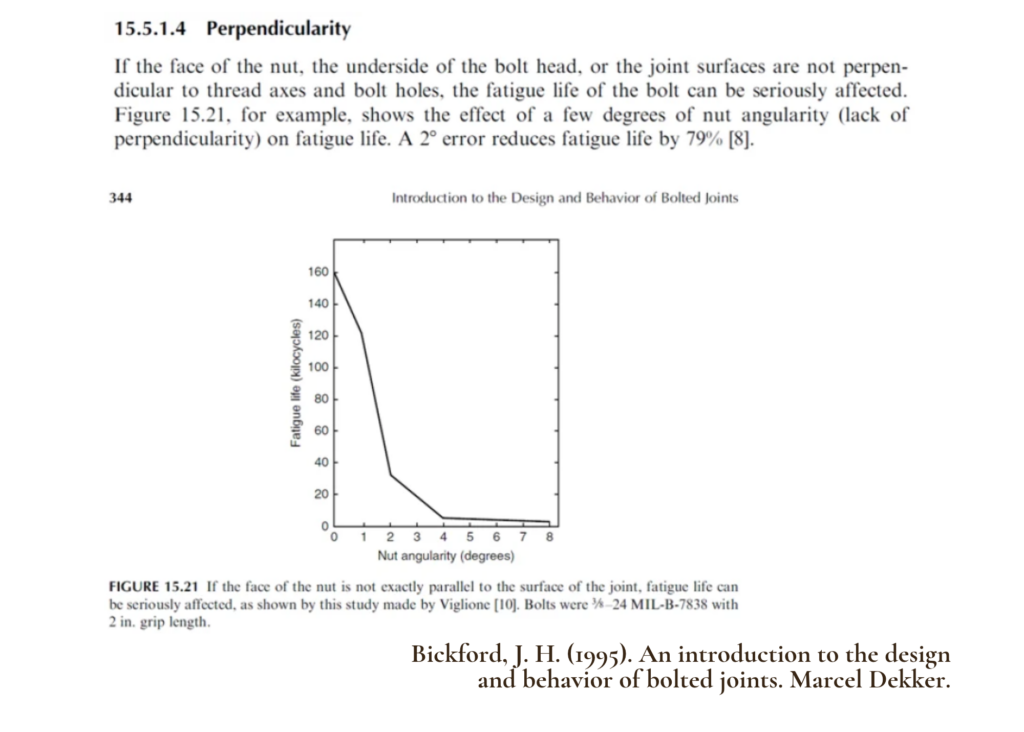
Consider what happens when a nut is installed on a bolt. The internal thread guides the nut along the bolt’s axis, and as the nut reaches the joint surface, the bearing face makes contact and begins transferring the clamping force into the assembly. Ideally, the bearing face is properly oriented relative to the thread axis.
If the face is not sufficiently perpendicular to the thread axis, contact with the joint surface can become uneven. Similarly, if the internal thread is not properly aligned with the rest of the nut geometry, the nut may transfer load unevenly as it moves along the bolt. That matters because a bolted joint depends on predictable contact and clamp load.
The Difference Is in How the Nut Is Made
This is where manufacturing processes become important.
Internal threads are produced using two thread-cutting methods: machine threading and tap thread cutting. Valley Forge & Bolt can use either method, allowing us to choose the best option based on the application’s requirements. We focus not only on cutting threads into the nut, but also on how the manufacturing process controls the geometry of the finished component. More often than not—especially for critical applications—we believe the best geometry for a finished component comes from machine threading.
Machine Threading
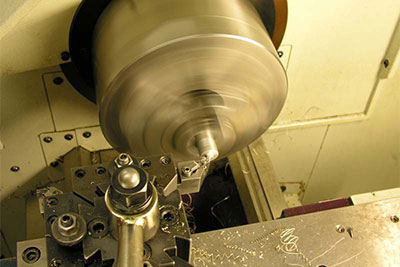
In machining threading, the internal threading is established using a specialized tool to cut threads within the nut to the required size and pitch, while the bearing face is also machined to remove material from the nut’s surface for a flat, smooth, and consistent contact area. Forming both the bearing face and internal threads in one operation helps to mitigate any variation that might occur in multiple operations by keeping alignment on the axis. The CNC machine precisely controls the threading tool’s rotation and movement within the pre-drilled hole to create uniform threads, which allow the bolt to engage properly. While the nut thread-to-bearing surface does have runout tolerance, the closer that tolerance is to zero, the better critical fasteners perform in the life of a bolted joint.
Tap Thread Cutting
Tap thread cutting uses a specialized cutting tool called a tap to create internal threads inside the nut, removing material with its cutting edges to form the required thread profile. The precision of tapping at a clean ninety-degree angle is harder to achieve without the support of a CNC machine, so the likelihood of a greater thread-to-bearing surface tolerance is important to consider. Additionally, the bearing face is processed in a second operation instead of at the same time, which could affect the perpendicularity.
While threads are an important component when evaluating a nut, the bearing face is equally important. Threads control how a nut travels, and the bearing face controls how the nut bears load. Once a nut is tightened, the bearing face and the first few threads become the interface through which the nut transfers compressive force into the joint. This makes the geometry and condition of the bearing face important considerations when designing and manufacturing a critical fastener.
Why This Matters for Critical Fasteners
Critical fasteners are used in applications where the consequences of a poorly performing bolted joint can be significant, such as:
- Mining
- Oil and gas
- Refining
- Chemical processing
- Power generation
- Steel mills
- Heavy equipment
- Rail and transportation
- Large industrial machinery
- Other high-load industrial applications
Valley Forge & Bolt takes a manufacturing approach designed to create a nut in which the thread and bearing face are as accurately related and aligned as possible. We specifically manufacture fasteners and bolting technologies for critical applications across these environments, and we’ve been doing so for over fifty years.
If you’re dealing with a difficult bolting application, fastener failure, unusual joint geometry, or a requirement for specialized fasteners, our team can help you identify the right solution. Contact us today to discuss your critical bolted-joint requirements!